- Free Online Tool
Code Cracker Solver – Find Missing Letters and Solve Codeword Puzzles Instantly
If you are stuck on a code cracker puzzle and cannot figure out what word fits, this page is built for you. The Code Cracker Solver is a free online tool that helps you find missing letters and complete codeword, codebreaker, and crossword puzzles in seconds. Enter the letters you already know, choose the word length, and get a full list of possible answers instantly.
Code Cracker Solver
Find missing letters, crack codeword puzzles, unscramble anagrams and check Scrabble words.
Crossword & Code Cracker Solver
Type the letters you know into the boxes. Leave unknown positions blank, or use wildcards: * + -. Searches … words instantly.
Letters (one per box)Tip: click any word to copy it. The def link opens its dictionary definition.
Codeword / Code Cracker Solver
Enter each word as its numbers separated by spaces (e.g. 4 17 4 9 22). Type letters you have solved into the 1–26 key — it is saved on your device. Add up to 4 crossing words.
Words (numbers and/or letters)Anagram Solver
Enter jumbled letters to find every word that uses them all.
Scrabble Word Finder
Enter your rack letters (? = blank tile, scores 0) and an optional pattern.
How this solver works
- Pick the number of letters (1–15).
- Type known letters into the boxes, one per box. Typing moves you forward automatically; Backspace on an empty box moves you back.
- For unknown spots leave boxes blank, or use wildcards: *, +, - — each wildcard character must always stand for the same letter, and the three groups must differ from each other.
- Press Solve (or Enter). Results show each word with its Scrabble score — click a word to copy it.
Exclude Match: when ticked, wildcards can't repeat letters you've already typed — the strict mode for real code-cracker puzzles.
Pattern field: you can also type the whole pattern at once using ? for blanks, e.g. SC**+.
- 01 — The Puzzle
Small Caps Text Generator
A code cracker puzzle is a type of word puzzle where every letter of the alphabet has been replaced by a number between 1 and 26. Your job is to figure out which number represents which letter and fill in the entire grid. Unlike crosswords there are no clues, which is why how to solve a Code Cracker starts with pattern spotting.
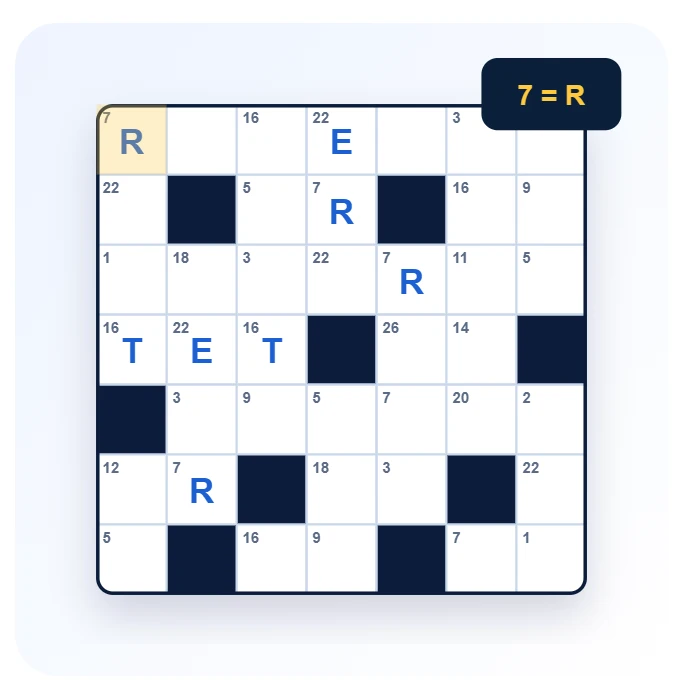
The puzzle works like a coded crossword. There are no clues. Instead, you start with a small set of pre-filled letters and use logical deduction to decode the rest. Once you figure out that number 7 equals the letter R, every square in the grid labelled 7 becomes R. This chain reaction is what makes code crackers both challenging and satisfying to solve.
Code crackers are also known by other names depending on where you live:
| Name | Common Region |
|---|---|
| Code Cracker | New Zealand, Australia |
| Codeword | United Kingdom (especially in the Daily Mail) |
| Codebreaker | UK puzzle magazines |
| Code-Cracker | Original brand name created by Simon Shuker |
| Coded Crossword | General international term used for number-substitution crossword puzzles |
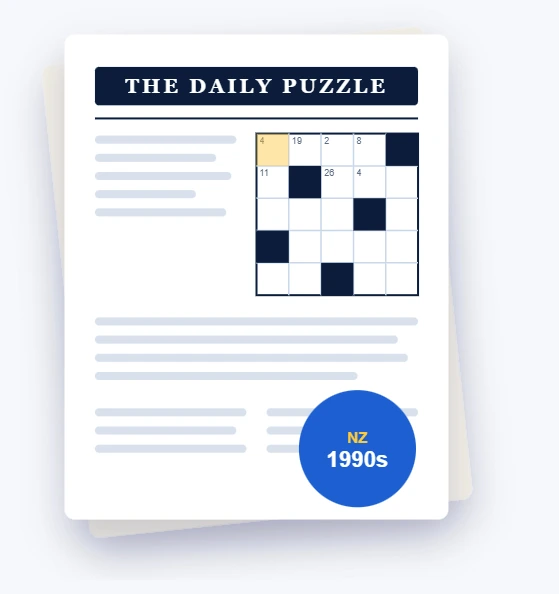
The Code Cracker puzzle was created by Simon Shuker, a Wellington-based New Zealand puzzle maker. The puzzle first appeared in New Zealand newspapers in the mid-1990s and quickly built a loyal following among readers who enjoyed its mix of logic and vocabulary.
The puzzle's international breakthrough came when the Daily Mail, one of the UK's largest newspapers, approached Shuker after noticing his Take5 puzzle in the New Zealand Listener. The Daily Mail asked him to develop a larger puzzle in a similar style. The result was Codeword, which launched as an immediate hit. It started appearing five days a week, then grew to six days, and eventually ran seven days a week when the Daily Mail Weekend magazine also adopted it.
Today, Code Cracker is the most widely published word puzzle in New Zealand. It runs daily in major papers including the New Zealand Herald, Dominion Post, The Press, and the Otago Daily Times. Simon Shuker handcrafts every puzzle individually rather than using computer generation, which keeps the difficulty balanced and the solving experience more satisfying.
- 01 — The Puzzle
History of Code
Cracker Puzzles
- 03 — Quick Start
How to Use the Code Cracker Solver
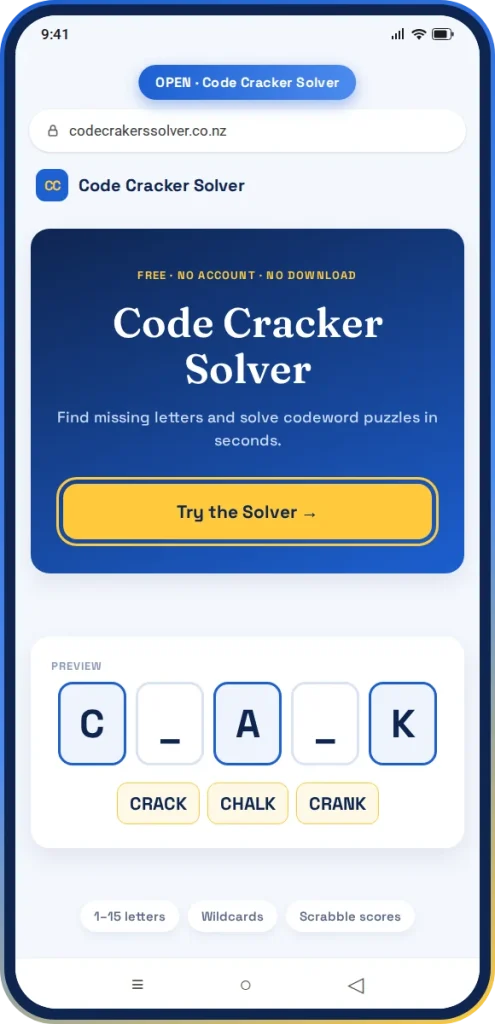
The Code Cracker Solver is designed to be simple. You do not need to create an account or download anything. Just follow these four steps:
The solver works for words from 1 to 15 letters long and covers a large English dictionary so you can find common and uncommon words alike.
The whole method rests on letter frequency in Code Cracker puzzles rather than general knowledge.
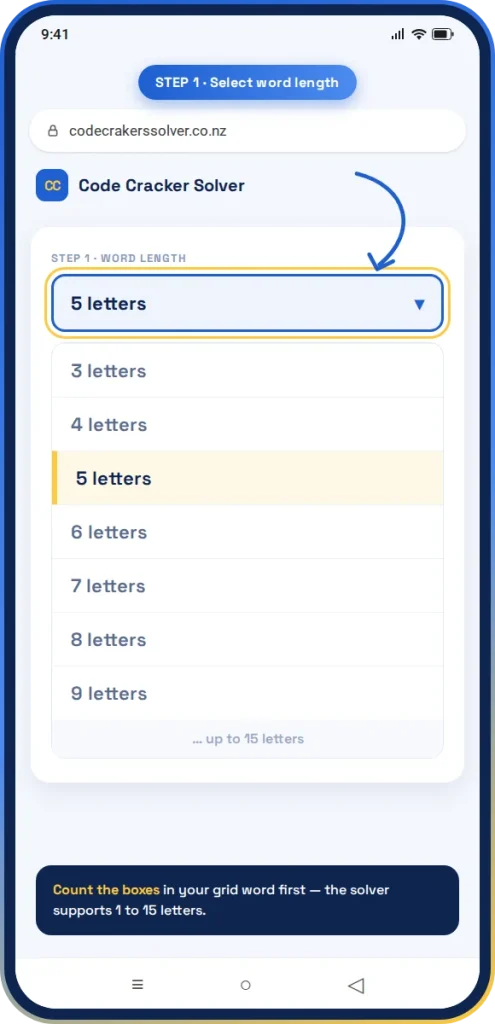
Select Word Length: Use the dropdown menu to choose how many letters the word contains.
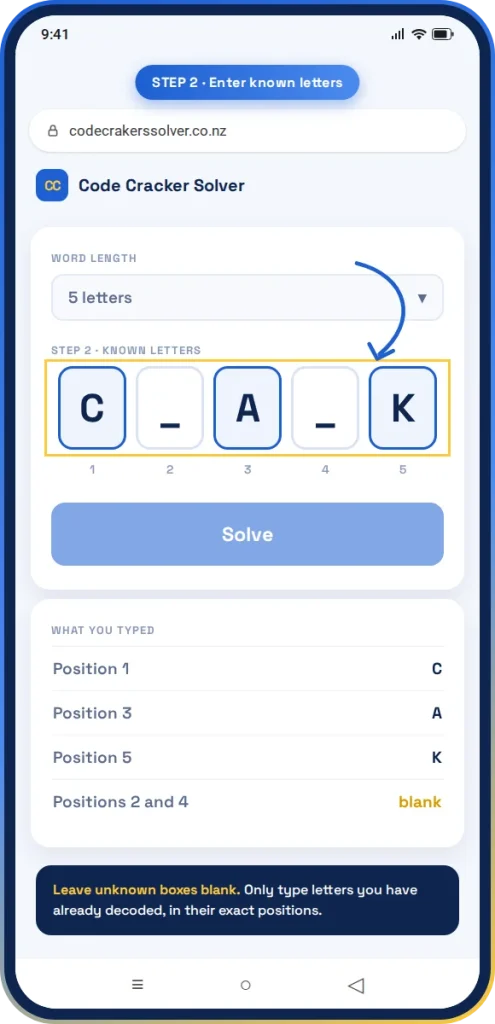
Enter Known Letters: Type the letters you have already decoded into the correct positions. Leave blank boxes for letters you do not know.
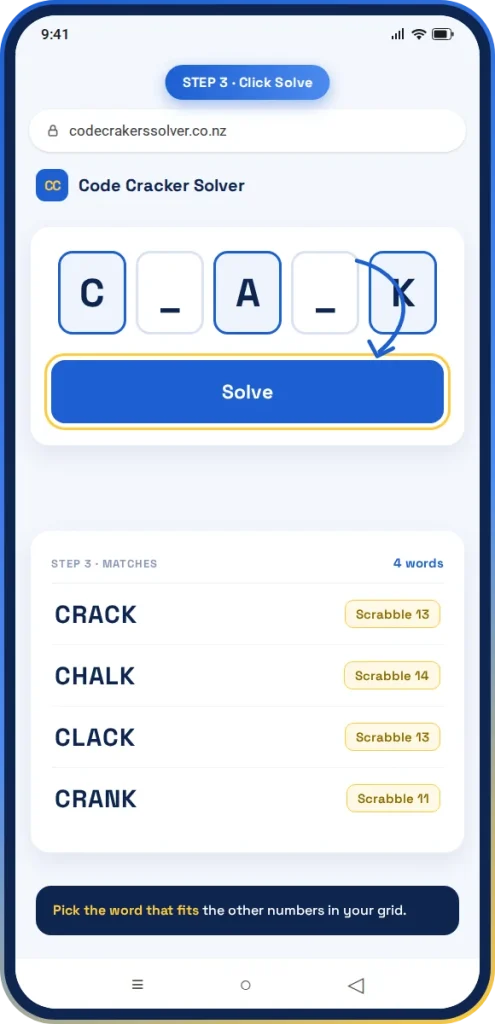
Click Solve: The tool instantly searches its dictionary and returns every word that matches your pattern.
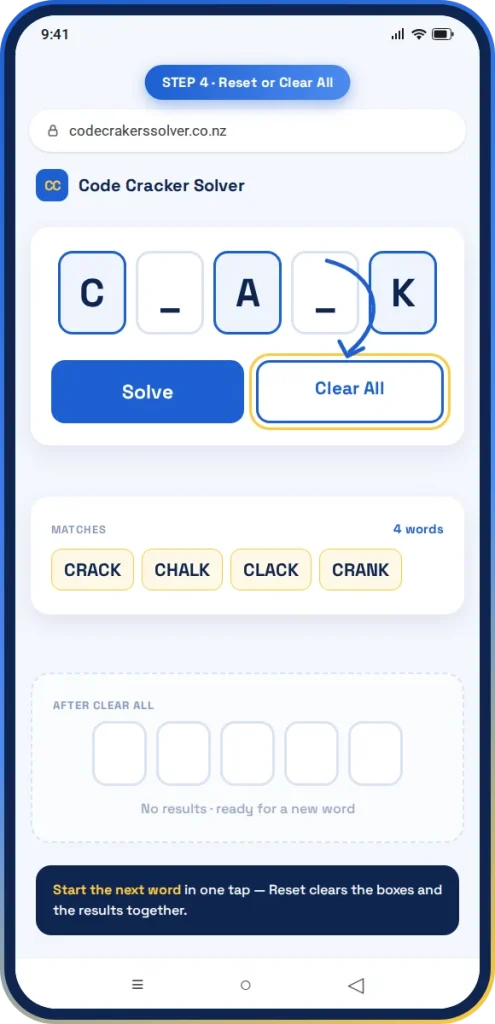
Reset or Clear:Use the Reset or Clear All button to start a new search without any hassle.
- 04 — Power Feature
How to Use Wildcards in the Code Cracker Solver
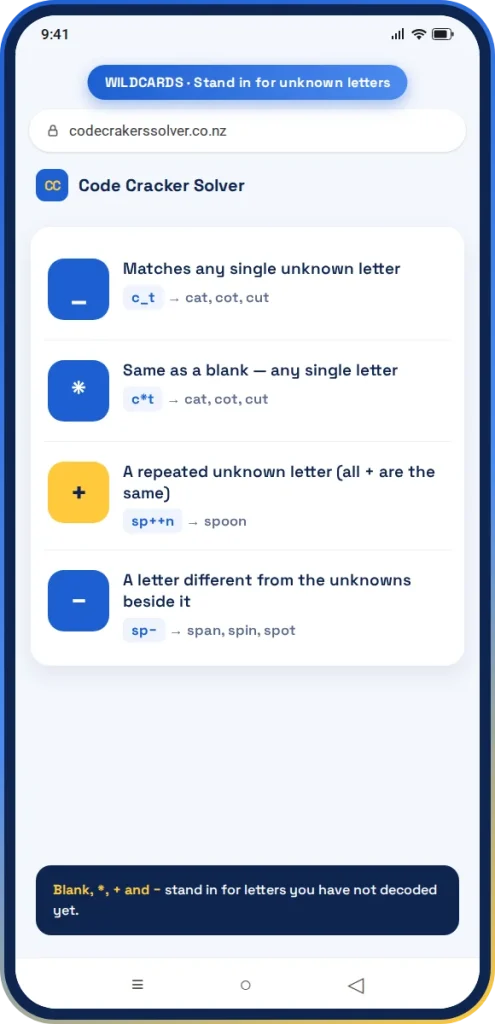
Wildcards are special characters that stand in for unknown letters. They are the most powerful feature of this tool and help you solve tricky patterns that a simple blank cannot handle. The most popular version in New Zealand is covered in our Simon Shuker Code Cracker solver guide.
| Wildcard | Meaning | Example Input | Example Matches |
|---|---|---|---|
| Blank or _ | Matches any single unknown letter | c_t | cat, cot, cut, cit |
| * | Matches any single letter (same as a blank) | c*t | cat, cot, cut |
| + | Matches a repeated unknown letter (all + symbols represent the same letter) | sp++n | spoon (double o), spell (double l) |
| - | Matches a letter different from adjacent unknowns | sp- | span, spin, spot |
Wildcard Example: Finding a Five-Letter Word
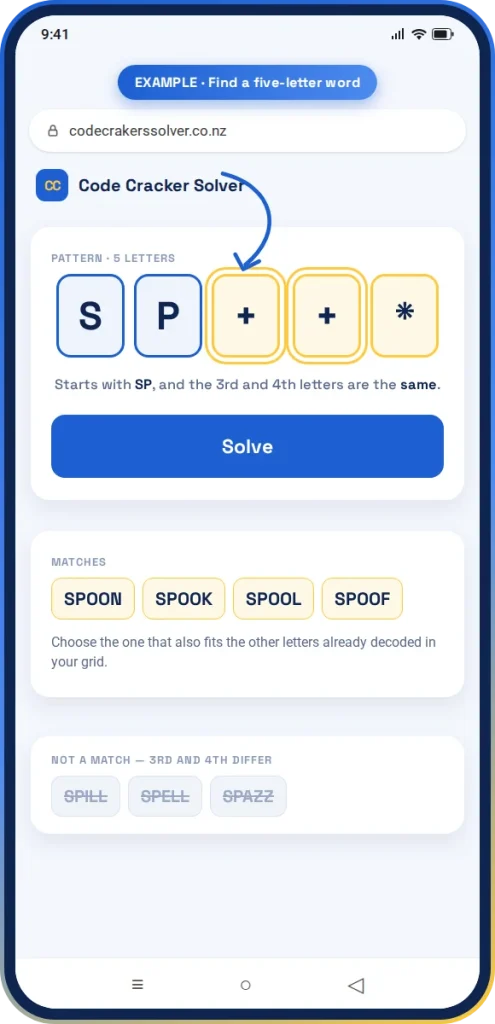
Suppose you need a five-letter word that starts with sp and where the third and fourth letters are the same. Enter: sp+*
Possible answers the solver returns: spoon, spill, spell, spazz. Pick the one that also fits other decoded letters in your puzzle grid.
Wildcard Example: Finding a Five-Letter Word
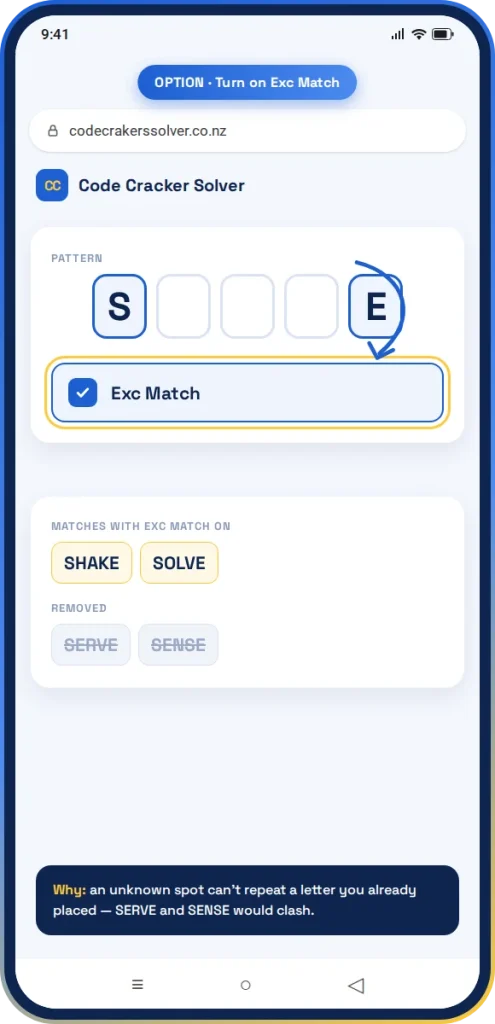
When you check the Exc Match box, the solver excludes any results where the wildcard position matches one of your already-known letters. This prevents the tool from suggesting words that would create a contradiction with letters you have already placed in the grid.
- 05 — Strategy
Tips for Solving Code Cracker Puzzles Faster
Even with a solver tool, understanding some core solving strategies will help you make faster progress through the grid. Both puzzle types sharpen the mind, as explained in Code Cracker puzzle brain benefits.
Start With the Pre-Given Letters
Every code cracker puzzle gives you a small set of starter letters. Write these into the grid first. They give you the foundation to start recognising word patterns in nearby cells.
Look for Single-Letter Words
If a numbered cell appears alone between two black squares, the word is only one letter long. In English, that almost always means A or I. Identifying these early unlocks several numbers at once.
Count Letter Frequency
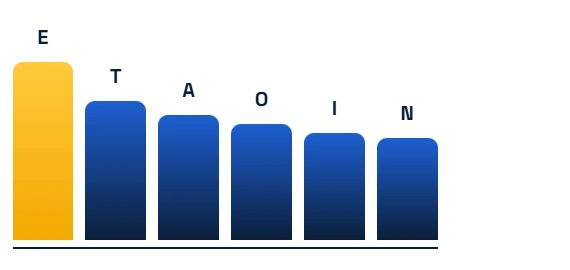
The most commonly used letters in English are E, T, A, O, I, and N. If a number appears very frequently across the grid, it is likely one of these letters. E is the most common single letter in English text, so the number that appears most often is a strong candidate for E.
Look for Repeating Patterns
If a word in your grid has a pattern like 16-22-16-22 (alternating numbers), that means it follows an ABAB letter pattern. Very few English words match this structure, which dramatically narrows down your options. Common repeated letter combos include -ss, -tt, -rr, -oo, and -ee.
Use Letter Combinations
English spelling follows predictable rules. No words start with ck, dt, or fg. Q is almost always followed by U. Words that end in -ing, -ion, -tion, -ness, or -ment are very common. If you have decoded the letter N and see it at the end of a longer word, try -tion or -tion patterns.
Cross-Check Every Decoded Letter
Each time you decode a new number, check every other word in the grid that contains the same number. This cascade effect either confirms your guess or reveals a contradiction that tells you to reconsider.
- 06 — Compare
Code Cracker Solver vs Other Online
Tools – Feature Comparison
There are several tools available online for solving code cracker and codeword puzzles.
Here is how they compare:
| Tool | Wildcard Support | Word Length Filter | Multi-Pattern Mode | Scrabble Scores | Free to Use |
|---|---|---|---|---|---|
| codecrackersolver.co.nz | Yes (*, +, -) | Yes (1–15) | No | Yes | Yes |
| codewordsolver.com | Yes (., ?, numbers) | Yes | Yes (multi-pattern) | No | Yes |
| lesnalder.co.nz | Yes (*, +, -) | Yes | No | No | Yes |
| crosswordcracker.com | Yes (space = blank) | Yes | No | No | Yes |
| wordhippo.com | Yes | Yes | No | No | Yes |
| codewordsolver.co.uk | Yes | Yes | Yes (two-pattern) | No | Yes |
- 07 — Play
Where to Play Code
Cracker Puzzles Online
If you want to play a fresh code cracker puzzle rather than solve one you are already working on, several platforms publish new puzzles regularly.
| Platform | Puzzle Type | Frequency | Notes |
|---|---|---|---|
| 01Lovatts (lovattspuzzles.com) | Code Cracker | Daily | Quick Mode and Challenge Mode available |
| 02NZ Herald (nzherald.co.nz) | Code Cracker | Daily (7 days a week) | Handcrafted by Simon Shuker |
| 03MiNDFOOD | Code Cracker | Daily | Browser-based with hint system |
| 04Puzzler NZ | Code Crackers Magazine | Monthly issue | 125+ puzzles per issue, including short-code variants |
| 05Google Play – CodeWords | Mobile App | On demand | Available in New Zealand (net.lrstudios.codewords) |
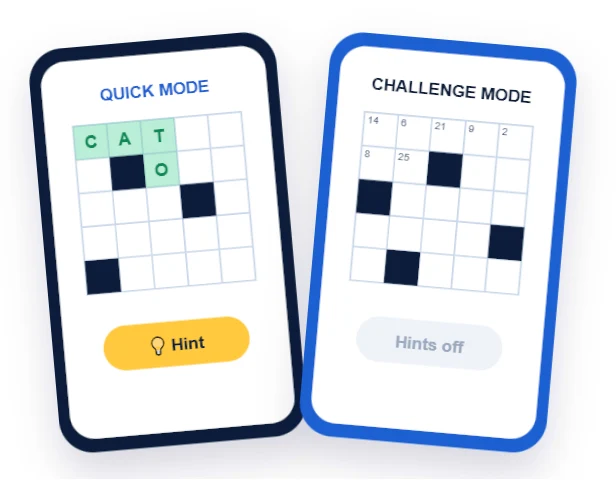
Lovatts Code Cracker – Quick Mode vs Challenge Mode
Lovatts offers two ways to play their daily puzzle. In Quick Mode, you can use hints that reveal the correct letter for any cell you are stuck on, and a visual guide highlights correct letters in green so mistakes are easy to spot. In Challenge Mode, hints and visual guides are turned off, making it a purer test of your deduction skills.
- 08 — Versus
Code Cracker vs Codeword – What Is the
Difference?
Many players wonder if code cracker and codeword are the same thing. The short answer is yes. They are the same style of puzzle with different regional names.
| Code Cracker | Aspect | Codeword |
|---|---|---|
| New Zealand (created by Simon Shuker) | Origin | UK adaptation popularized by the Daily Mail |
| 15×15 crossword-style grid | Grid Style | Same format |
| Numbers 1–26 replace letters | Mechanic | Identical mechanic |
| Starter letters are provided | Pre-given Letters | Same |
| Decode all numbers to reveal words | Goal | Same |
| Code-Cracker, Codebreaker, Coded Crossword | Other Names | Codeword, Code Breaker |
- 09 — Answers
Frequently Asked Questions
What is a small text generator?
A code cracker is a coded crossword puzzle where every letter in the grid has been replaced by a number from 1 to 26. You receive a few starter letters and must deduce all remaining letter-number pairs through logical reasoning and vocabulary knowledge.
How does the Code Cracker Solver work?
You select the word length, enter any letters you already know, and leave blanks or wildcards for the unknown positions. The tool searches a large dictionary and returns every word that matches your pattern. Each result includes a Scrabble score so you can also use the tool for word games.
Can I use this solver for crossword puzzles too?
Yes. The wildcard system works for any pattern-matching word search, including standard crossword clues where you know some letters and need to fill in the blanks.
What does the Exc Match checkbox do?
When you tick Exc Match, the solver filters out any word where a wildcard position happens to match one of your known letters. This keeps results clean and avoids suggestions that would create duplicate letter assignments in your code.
Who invented the Code Cracker puzzle?
Simon Shuker, a Wellington, New Zealand puzzle maker, created the Code Cracker. The puzzle first appeared in New Zealand newspapers in the mid-1990s before spreading to the UK’s Daily Mail as Codeword, where it has run continuously for more than 20 years.
Is there no proper nouns in code cracker puzzles?
Correct. All words used in code cracker puzzles come from the standard dictionary and no proper nouns are included. This is part of what makes the puzzle a fair test of general vocabulary rather than trivia knowledge.
What is the difference between a code cracker and a regular crossword?
A regular crossword provides written clues for each answer. A code cracker gives you no clues at all. Instead, numbers replace letters and you must work out the code using logic, pattern recognition, and your knowledge of English words and spelling rules.
